Choosing the Right Marketing Channel
With hundreds of platforms competing for your budget, the brands that win choose channels based on data — not trends.
ShraviTech
ShraviTech · Published on Dec 16, 2024
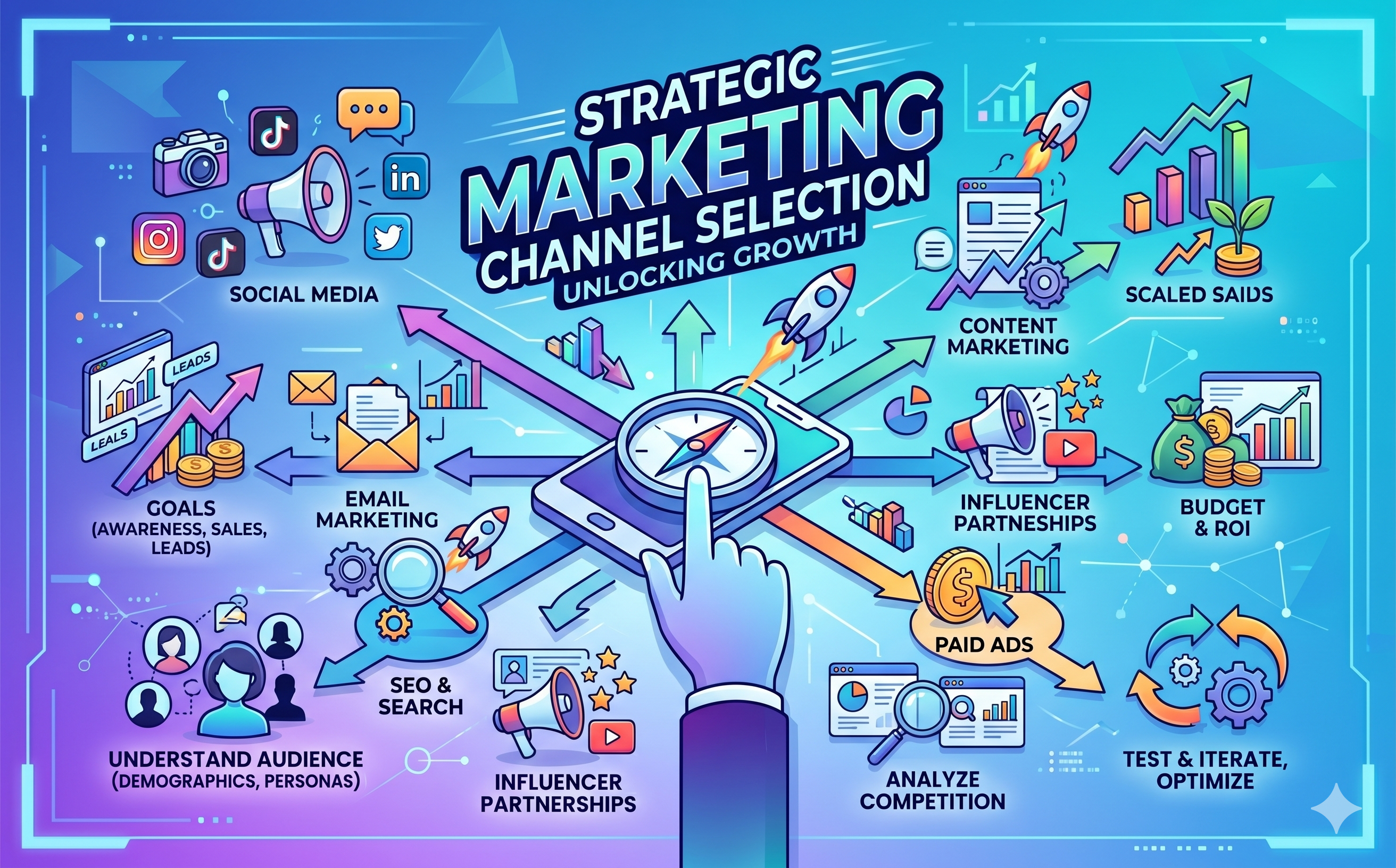
Choosing the right marketing channels is crucial for an effective strategy that drives business growth. Without strategic direction, marketing efforts scatter and underperform. With countless digital platforms available, selecting channels aligned with audience behaviour, industry standards, and budget is what separates brands that scale from brands that stall.
Define Your Goals
Marketing objectives should guide every channel decision. Brand awareness calls for broad-reach platforms like social media and influencer partnerships. Sales growth demands conversion-focused channels like email and SEO. Lead generation favours content marketing. Customer engagement thrives on interactive, personalised channels.
Understand Your Audience
Effective channel selection requires knowing who you are talking to. Gen Z gravitates toward YouTube and Instagram. B2B buyers live on LinkedIn. Build buyer personas, study demographic data, and let audience preference — not platform hype — drive your decisions.
Evaluate Channel Relevance
Assess each channel for audience reach, engagement capability, cost-effectiveness relative to ROI, and brand alignment. Visually-oriented products perform better on Instagram and Pinterest. Thought leadership belongs on LinkedIn. Match the medium to the message.
Analyse Your Competition
Research your competitors — direct and indirect. Study their channel strategies, evaluate their success metrics, and identify gaps you can exploit. Competitive analysis reveals where the attention already is and where there is room to win.
Test and Iterate
Run small-scale tests across candidate channels before committing budget. Monitor KPIs, analyse results honestly, and double down on top performers. No channel strategy survives first contact with the market unchanged.
Build a Multi-Channel Strategy
Diversify across complementary channels while maintaining consistent messaging. Allocate resources strategically and avoid spreading too thin — focus beats presence on channels that do not convert.
Monitor and Optimise
Track key metrics continuously. Collect customer feedback. Analyse data and adjust tactics based on what the numbers actually say. Channel selection is not a one-time decision — it is an ongoing process of refinement.
Tags
About Author
ShraviTech
ShraviTech