How a nursing exam-prep platform went from 1,410 to 616,053 weekly search impressions in 8 months
An SEO and AI search case study from India's competitive exam-prep market: 437× impressions, 50× clicks, average position 13 to 4, and the search-demand framework behind it.
Prathyusha Peguda
Search & AI Visibility @ ShraviTech · Published on Sep 16, 2026
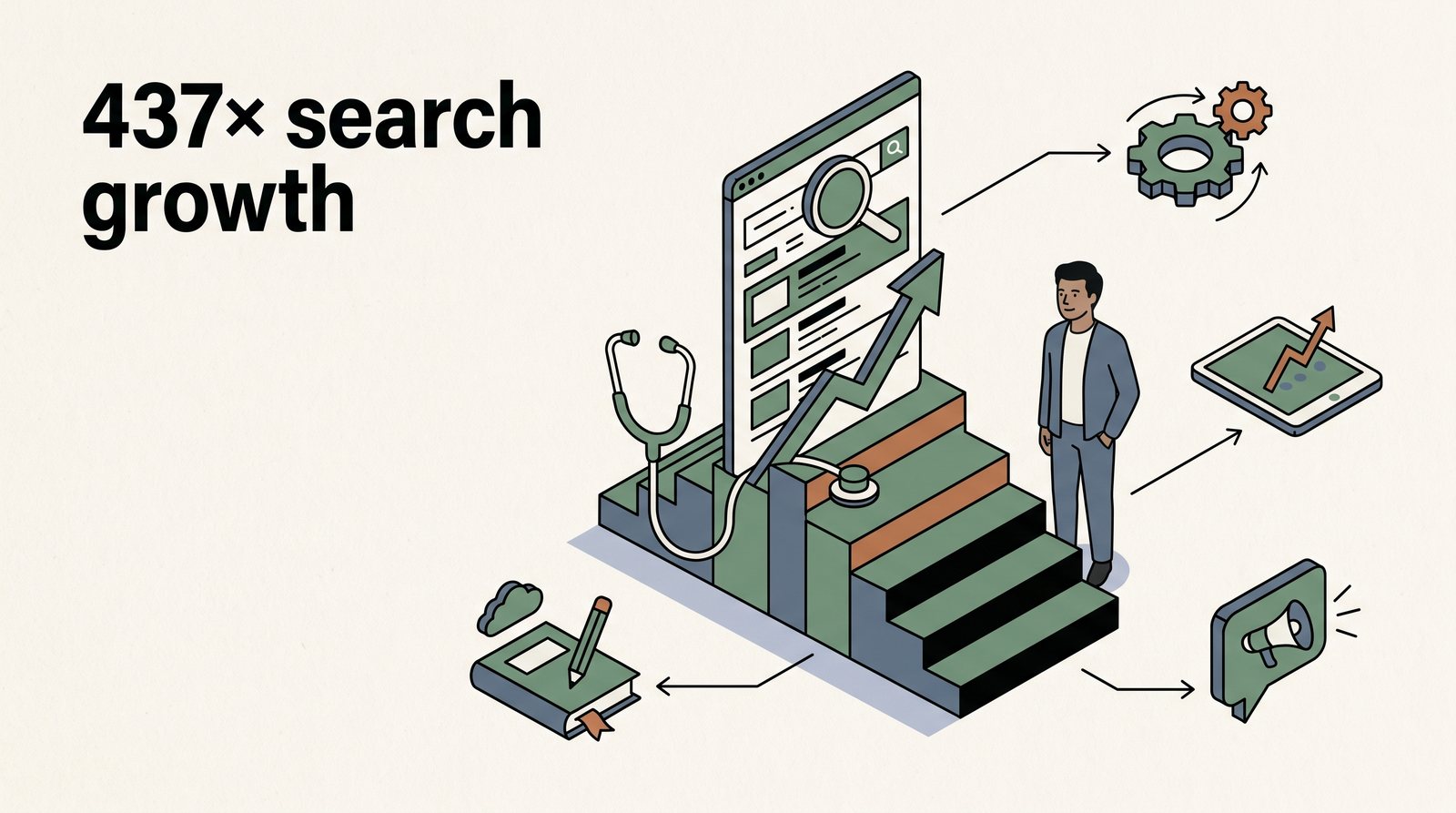
Competitive exam prep is one of the hardest SEO markets in India. Physics Wallah, Adda247 and Testbook own most of page one for most queries. This is how a nursing exam-prep platform with good content and page-two rankings grew weekly search impressions 437× in eight months, without outspending any of them.
Engagement: EdTech, competitive exam prep · Search & AI Visibility · July 2025 to March 2026
The numbers
| Metric (weekly) | Before, July 2025 | After, March 2026 | Change |
|---|---|---|---|
| Search impressions | 1,410 | 616,053 | about 437× |
| Clicks | 236 | 11,918 | about 50× |
| Average position | 13 | 4 (average 4.4) | up 9 places |
Over the eight months the site earned 8.1 million impressions and 160,000 clicks in total. Visibility went from local to nationwide for the exams that drive enrolments.
The situation
The platform had genuinely good, concept-driven nursing preparation. What it did not have was a site built the way aspirants search. A nursing candidate follows a predictable sequence: the exam notification, then the syllabus, then preparation resources, then mock tests and previous-year questions. The site was organised around the product instead, so it caught almost none of that journey. It sat around position 13, which is page two, which is nowhere.
Two more constraints. More than 90 percent of the audience is on a phone, and the experience was not built mobile-first. And every query the platform wanted was already held by an incumbent with a bigger content team.
What we did
We did not chase individual keywords. We mapped demand and built for it.
- →Competitive and demand mapping. For each target exam (NORCET, RRB, ESIC, B.Sc nursing entrances) we listed the queries at every stage of the journey and which incumbent held each one, then chose the stages where the incumbents were thin.
- →Pillar-and-spoke hubs. One hub per exam, with spokes for notification, syllabus, resources, mock tests and previous-year questions. Published daily, so every stage of the journey had a page within weeks, not quarters.
- →On-page and mobile-first fixes. Headings and internal links that follow the journey, and a mobile experience that a candidate on a mid-range Android phone can actually use.
- →AI search optimisation. Question-led sections, author and organisation signals, and YouTube tagging so the same content is findable by Google, by ChatGPT and Perplexity, and by video search.
What made it work
Topical authority moved rankings before the technical work was finished. The site was ranking on page one for high-value queries while Largest Contentful Paint was still being fixed, which is the clearest evidence we have that in this market coverage of the journey matters more than raw page speed. Speed still matters; it just was not the bottleneck.
The second thing is durability. Because the hubs are built around how people search rather than around a product catalogue, new exam cycles slot into the same structure. And because the pages answer questions in the first paragraph and carry the right structured data, they are already formatted for answer engines, which is where a growing share of exam queries are heading.
What we would tell a founder in the same spot
- →Map the journey before you write anything. Most EdTech sites are organised by course, and aspirants do not search by course.
- →Publish in hubs, not in one-off blog posts. A single strong hub outranks fifty loose articles.
- →Do not wait for the site to be fast to start. Fix speed in parallel, but start the content engine now.
- →Build for answer engines from the first page. Retrofitting is slower than doing it once.
If people search for what you teach and cannot find you, that is fixable. Search & AI Visibility is the service behind this engagement, and the full set of results is on the work page.
FAQs
How long before rankings moved?+
Impressions started climbing in the second month, once the first hubs were complete. The steep part of the curve came in months four to eight as the spokes filled in.
Did paid search play any part?+
No. This engagement was organic search and AI visibility only.
Would this work outside exam prep?+
The framework works for any market where buyers follow a predictable sequence of questions: healthcare, property, B2B software, professional courses. The exams change; the method does not.
Why is the client anonymised?+
We do not name clients on this site. The numbers are from the platform's own Search Console and we can walk you through them on a call.
Tags
About Author
Prathyusha Peguda
Search & AI Visibility @ ShraviTech