18× ROI and zero balance discrepancies: building a retail distribution operator's system from scratch
A progressive web app replaced paper invoice books and manual ledgers for a retail distributor. An hour a day saved per salesman, two to three per accountant, and no more disputes.
Smaran Challapalli
Web & App Dev @ ShraviTech · Published on Aug 24, 2026
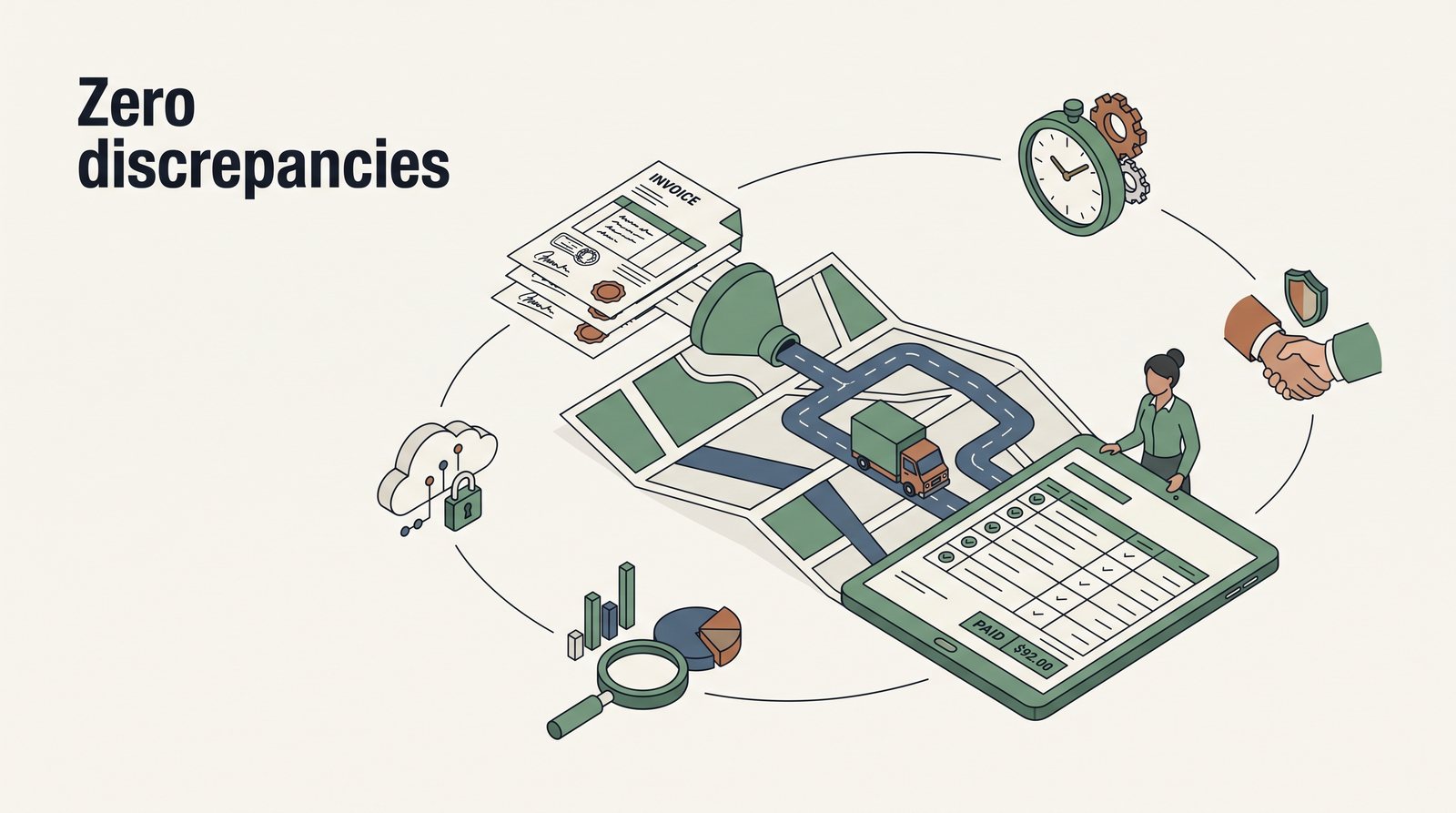
Retail distribution in India runs on paper. Invoice books, manual ledgers, an end-of-day tally, and disputes about who paid what. This is how a distributor replaced all of it with a web app that installs from the browser, runs on cheap phones, and has produced zero balance discrepancies since.
Engagement: Retail distribution, FMCG · Web & App Development, custom product build
The numbers
- →18× or better return on investment compared with a traditional ERP or a dedicated auditor
- →About one hour a day saved per field salesman
- →Two to three hours a day saved per accountant
- →Zero balance discrepancies since go-live
The situation
High-frequency, low-margin sales across fragmented routes. Salesmen wrote invoices in books, accountants copied them into ledgers, and collections leaked between the two. Nothing could be audited in real time, so every disagreement about a balance became a conversation instead of a lookup. An off-the-shelf ERP would have been expensive, slow to roll out, and built for a warehouse, not a route.
What we built
A real-time progressive web app that digitised the whole workflow:
- →Invoice onboarding at the point of sale, on the salesman's phone
- →Payment matching that auto-reconciles cash, GPay and cheques against outstanding invoices
- →A tamper-proof audit log of every entry and every edit
- →A live dashboard for managers, replacing the end-of-day tally
- →Add to Home Screen installation with no app store, and performance tuned for low-end devices
What made it work
The choice of a progressive web app rather than a native app or an ERP. No app-store friction meant every salesman was live on day one. Low-end device performance meant no hardware refresh. And because the system verifies balances rather than people asserting them, the audit log alone turned "he said, she said" disputes into a non-issue.
The 18× figure compares the build cost against what the operator would otherwise have paid for an ERP licence and rollout, or for a full-time auditor, over the same period.
What we would tell a founder in the same spot
- →Digitise the workflow you have, not the one a vendor's demo assumes.
- →Put the audit log in from day one. Trust is the feature; everything else is data entry.
- →Choose the delivery method by the cheapest phone in the field.
- →Measure return against the alternative you were actually going to buy.
If your operation runs on paper and disputes, the fix is usually smaller than an ERP. Tell us the workflow on the contact page. The service behind this build is Web & App Development, and the full results are on the work page.
FAQs
Why not an ERP?+
Cost, rollout time, and fit. ERPs are built around warehouses and purchase orders; this business is built around routes and collections.
Does it work offline?+
It is designed for patchy connectivity, with entries syncing when the connection returns.
Can the same system serve other distributors?+
The engagement was built for one operator. The pattern, route-based invoicing with reconciliation and an audit log, transfers to most distribution businesses.
Tags
About Author
Smaran Challapalli
Web & App Dev @ ShraviTech